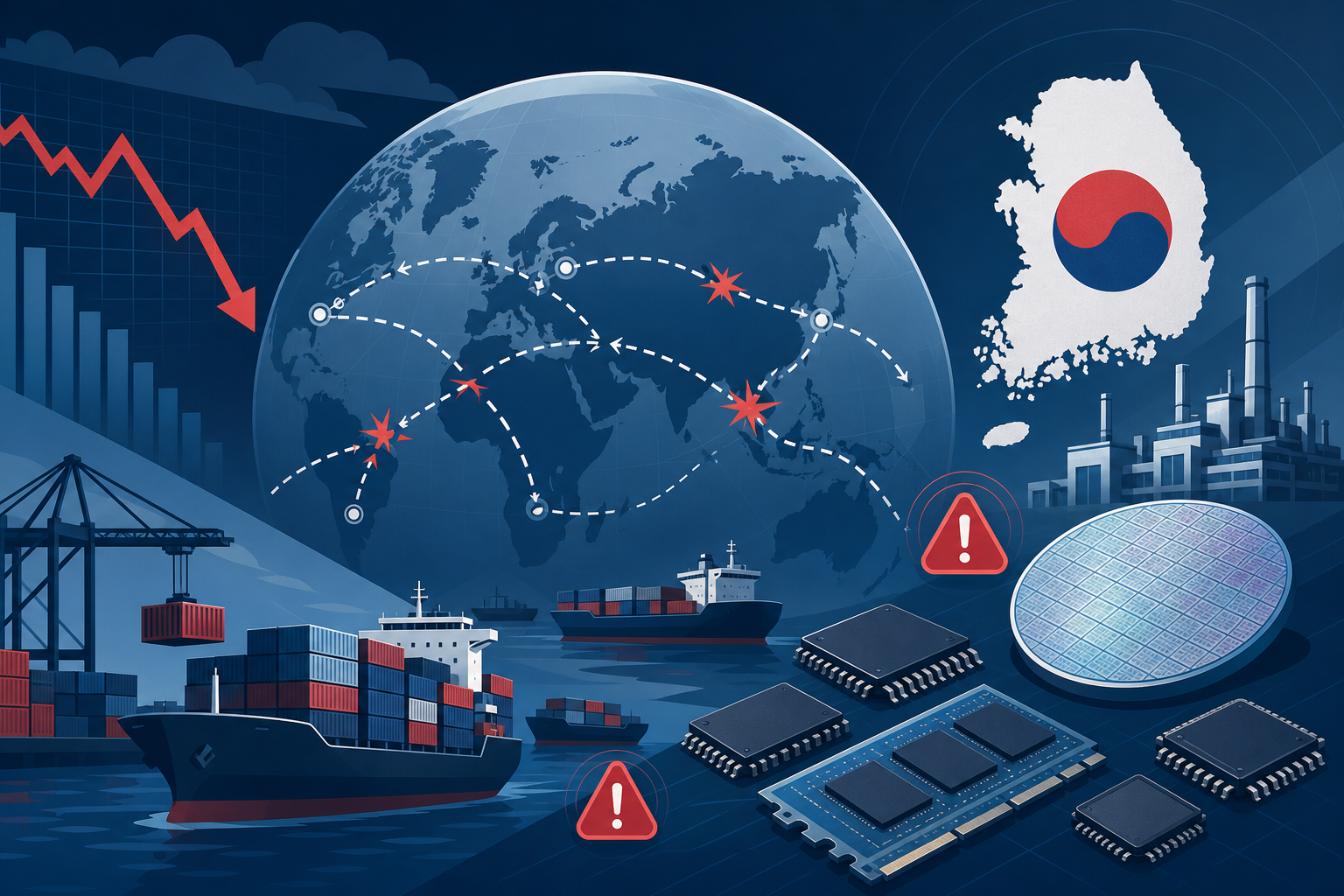
- A global DRAM shortage has pushed prices up sharply, with some RAM sticks now costing more than a round-trip flight to Europe.
- Apple and Microsoft can pass costs to consumers; smaller electronics makers face existential collapse.
- SK Hynix’s HBM bet has paid off spectacularly — it now surpasses Samsung in market value.
- Micron just posted 80.4% operating margins, confirming this is a full memory mega-cycle.
- The risk: a class-action antitrust suit filed June 25 alleges Samsung, SK Hynix, and Micron colluded to suppress legacy DRAM supply.
Everyone’s celebrating the cycle. Nobody’s asking who gets hurt when the music stops.
Micron: 80.4% operating margin. SK Hynix ADR raising ₩45 trillion. The music isn’t stopping.
Margin peaks are a signal, not a destination. We’ve seen this before.
Exactly. 1996. Micron fell 81% after prices collapsed. Same setup: euphoria, then order cancellation.
That was commodity DRAM with no AI anchor. HBM4 is structurally different demand.
“Structurally different” is what everyone says at the top of every cycle.
Fair. But name the demand destroyer this time. Consumer? Server capex is still accelerating.
Price is the destroyer. Memory costs are already forcing smaller OEMs out of the market entirely.
And when small OEMs exit, end-demand for commodity DRAM collapses. Server demand alone can’t hold the whole market.
Server and commodity are different pools now. Don’t conflate them.
They share fabs. Samsung and Hynix are doing emergency supply chain checks — China’s tungsten controls hit WF₆ gas supply.
That’s the part the market is ignoring. Input constraint, not just demand.
So supply stays tight longer. That’s actually bullish for prices near-term.
Until it isn’t. Antitrust suit now claims 8x price increase = collusion. Three-times damages under US law.
The 2002 case hit Samsung and Hynix hard. This one has a bigger paper trail.
Litigation risk is real but slow. Cycle peak is the nearer-term question.
Consensus already sees memory peaking in H2 2027. PER-based fair value is already declining on that timeline.
Which is why SK Hynix is raising capital NOW via the Nasdaq ADR. They know the window.
Smart. But Apple is reportedly approaching China’s CXMT to break the oligopoly’s pricing power.
CXMT qualification takes months. Not a near-term threat, but it is a structural crack.
Samsung’s HBM4 gap to Hynix is also narrowing. Reuters confirmed Samsung moves to mass production first among the three.
If Samsung closes the HBM gap AND CXMT qualifies for legacy DRAM, Hynix’s premium compresses fast.
Two separate risks converging on one stock. That’s not a bull case, that’s a timing problem.
Still: NVDA and the memory three now represent nearly half of global semiconductor revenue. The structural shift is real.
Real shift, yes. But real shifts also end. Investor implication: the HBM premium is earned, not permanent.
The memory mega-cycle is not imaginary — Micron’s 80%+ operating margins and SK Hynix’s ₩45 trillion Nasdaq raise are hard data, not hype. But three forces are now converging to test the cycle’s durability: a US antitrust class action that could force supply behavior changes, China’s tungsten export controls quietly squeezing fab input costs, and Apple’s reported outreach to CXMT signaling that the largest buyer in consumer electronics is actively seeking to break Korean pricing power. The Street Pragmatist is right that the H2 2027 peak thesis is already embedded in valuations, meaning the market is pricing perfection into a situation with rising legal, geopolitical, and competitive tail risks. The single clearest investor implication: HBM leadership is the only defensible moat right now, and any credible news that Samsung has closed its HBM4 gap on SK Hynix — or that a new supplier qualifies — will reprice the entire sector faster than the antitrust headlines will.
Related reading: China’s Cheap AI Push: What Korean Investors Must Know
1 thought on “Memory Shortage: Korean Chipmakers’ Crisis and Opportunity”